Manulife Credit Card Experience
End-to-End Redesign
Redesigned a fragmented multi-vendor credit card experience into a unified, intent-driven self-serve journey.
Challenge
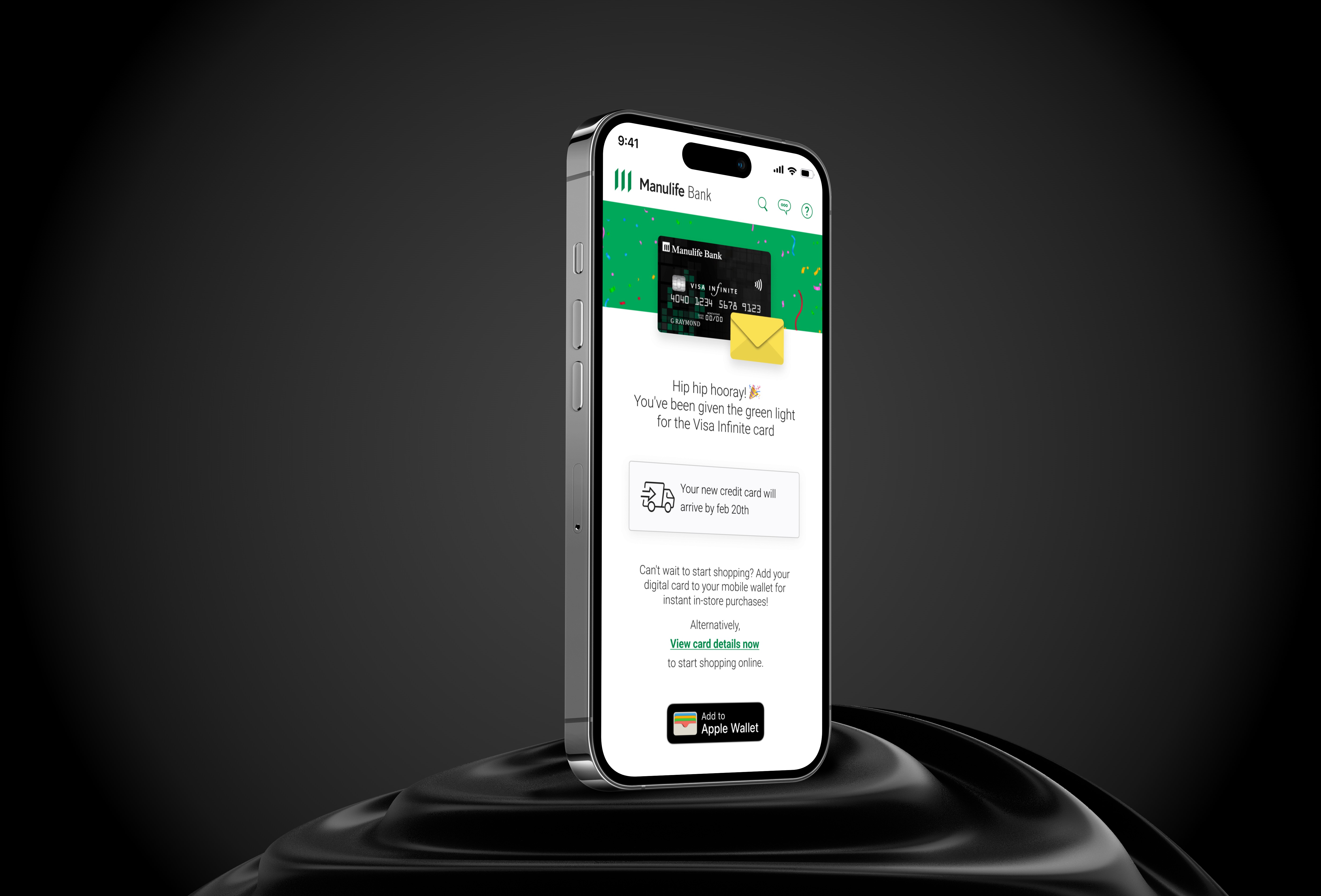
Manulife’s credit card experience was fragmented across application, servicing, and card management. Users had to navigate disconnected flows to complete essential tasks like payments, transaction reviews, and dispute resolution.
Parallel development across vendor systems and banking infrastructure led to:
Inconsistent entry points
High cognitive load
Friction in critical moments (payments, fraud)
Results
Synthesized stakeholder input + competitive analysis
Led journey mapping across acquisition → servicing
Identified workflow risks and fragmentation early
Reframed experience around user intent
Designed unified flows and interaction patterns

Solution
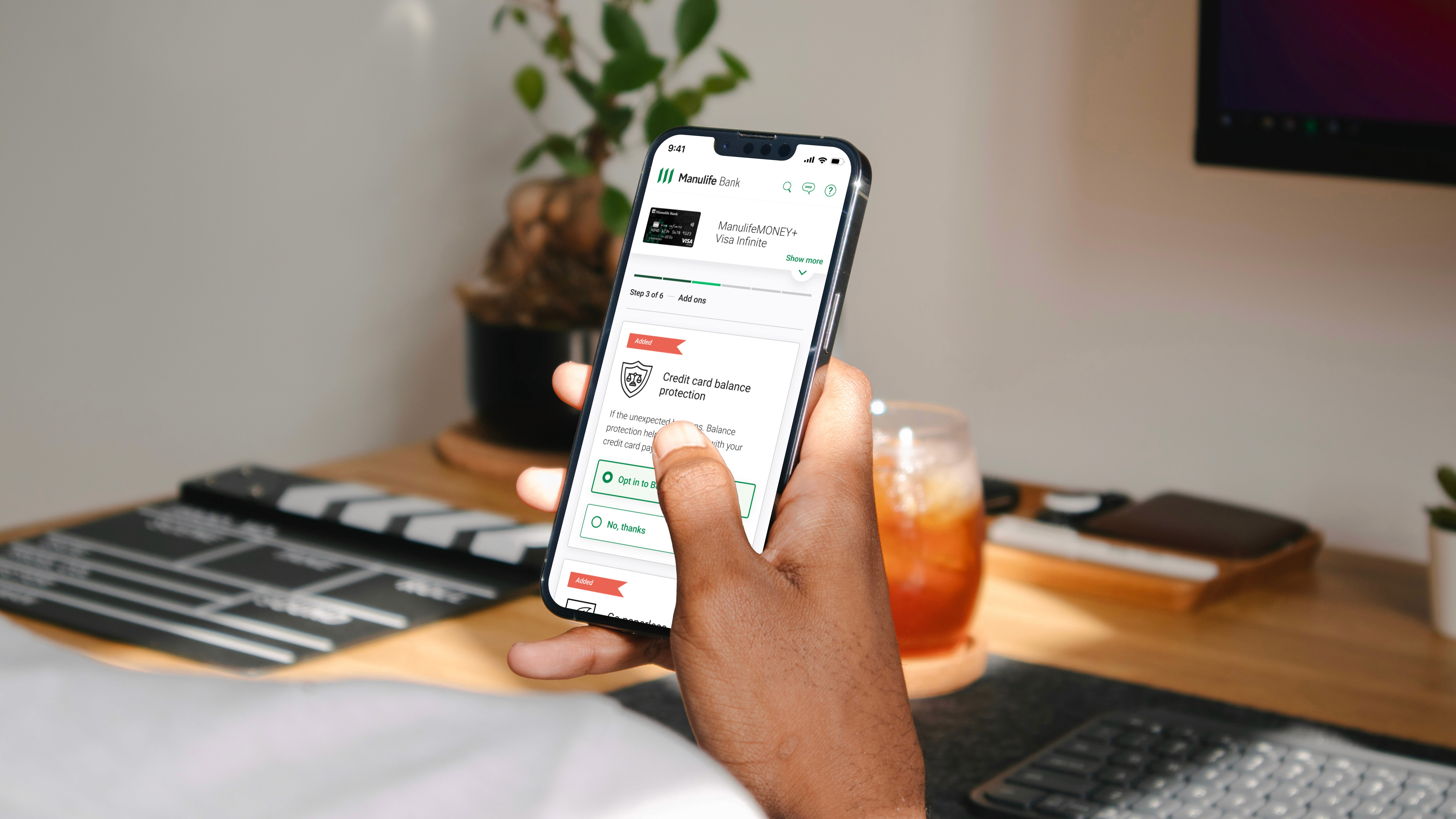
A unified credit card ecosystem centered on user intent
Reorganized the experience into 4 core user needs:
💳 Manage Card
💰 Manage Money
⚠️ Resolve Issues
📈 Stay in Control
👉 Consolidated fragmented features into a single, scalable experience layer
Critical Intervention
Identified early that a proposed workflow would increase cognitive load and fail within a complex, multi-system environment.


Conclusion
The Manulife credit card redesign demonstrates what it takes to bring clarity to a fragmented, multi-system experience. By reframing the product around four core user intents rather than system boundaries, the result was a unified mobile experience that made acquisition, servicing, and card management feel like one coherent journey - not three disconnected products. The early identification of workflow risks prevented a costly misstep and kept the experience grounded in what clients actually needed to do. This project reinforced that the most valuable design work often happens before a single screen is drawn - navigating competing vendor systems, regulatory constraints, and fragmented entry points required as much systems thinking as interaction design. That question - what does a client actually need to do, and how do we make that effortless regardless of what's running underneath - now shapes how I approach every complex product problem.